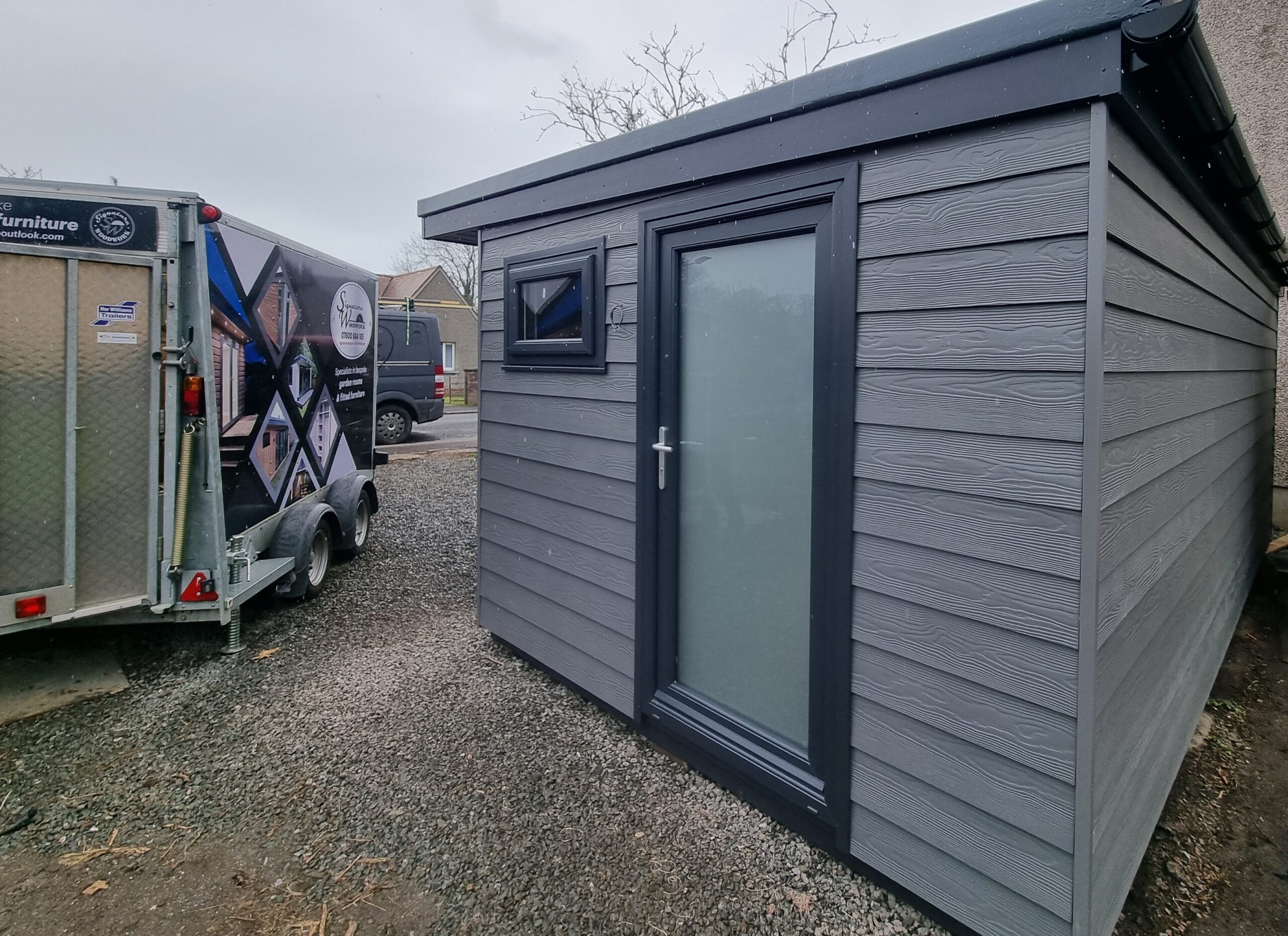
Ask someone to picture a shed and most people picture the same thing: a slightly leaning box at the end of the garden, holding a lawnmower, some paint tins and whatever would not fit anywhere else. It is not a glamorous image, and it undersells what a shed actually does for a garden and a household.
A shed solves a problem almost every home has and almost nobody plans for properly: where does everything go. The bikes, the mower, the tools, the seasonal decorations, the half-finished project on the workbench. Without somewhere designed for it, all of that drifts into the garage, the hallway, the spare room, slowly reclaiming space that was meant for something else.
A well-built shed puts a stop to that drift. It is one of the simplest garden additions available, and one of the most underrated.
What a Shed Actually Gives You
Space back, everywhere else
This is the benefit people notice last and value most. Once tools, equipment and outdoor clutter have a proper home, the garage becomes a garage again instead of a storage unit with a car parked awkwardly in front of it. The hallway stops collecting muddy boots and bikes. It is not really the shed that improves the house. It is everything the shed takes off the house’s hands.
A genuine workshop, not just a box
Anything at 3 metres by 1.8 metres or larger crosses from storage into workshop territory, with room for a proper bench, shelving and the space to actually use power tools rather than just store them. For anyone who works with wood, metal, bikes or cars as a hobby, that distinction matters. A cramped shed holds equipment. A properly sized one lets you use it.
A dedicated space for hobbies that need one
Woodworking, potting, brewing, painting, restoring anything with an engine: hobbies that involve mess, noise or half-finished projects rarely fit well inside a house. A shed gives that hobby permanent territory, insulated from the pressure of clearing it away before visitors arrive or before the kitchen table is needed for dinner.
Protection for things that are expensive to replace
A mower, a decent set of tools, a bike, garden furniture cushions: left outside or half-covered by a tarp, all of it degrades faster than most people realise. Weather, damp and UV exposure add up over a single season, let alone several. A dry, secure shed is cheap insurance against replacing things that did not need replacing.
Flexibility the rest of the garden does not offer
A shed is one of the few structures that can genuinely change purpose over time. Storage this year, a workshop next year, a reading nook or a teenager’s music space the year after that. Because it is a standalone building rather than a fixed extension, repurposing it is a weekend’s work, not a renovation.
Do You Need Planning Permission?
In Scotland, the majority of garden sheds fall under permitted development, meaning no planning application is needed for a modest, single storey timber building, provided it stays a reasonable distance from the boundary, keeps within height limits, and is not positioned in front of the house. This differs from garden rooms designed for full-time habitable use, which more often trigger a planning or building warrant conversation.
The specifics still depend on your council and your exact site, particularly for anything close to a boundary or on larger plots, so it is always worth a quick check before ordering rather than after. It is one of the questions we answer honestly on every site visit.
Why Quality Is the Whole Story
Here is where sheds quietly divide into two very different products wearing the same name. A cheap flat-pack shed, thin overlap cladding, minimal framing, a felt roof, will show its age within a couple of winters: panels cupping as the timber dries unevenly, corners pulling apart under snow load, damp finding its way in through the roof felt long before anyone expected it to fail.
A shed built properly is a different proposition entirely. Solid framing that will not flex or buckle. Cladding, ideally shiplap or a similarly weather-channelling profile, chosen for how Scottish rain actually behaves rather than how a listing photo looks. A base suited to the size and use of the building, because a shed that shifts on poor ground will never sit square again. None of this shows up in a brochure photo. All of it shows up five winters later, in the shed that is still standing square and dry against the one that is not.
This is the real argument for bespoke over off-the-shelf. A shed built for your garden, your ground and your climate by someone who works in this weather every week outlasts a catalogue box by years, often for a surprisingly small difference in price once you compare like for like.
Is a Shed the Right Call, or Do You Need More?
A shed earns its place when the need is storage, a workshop, or a hobby space that does not need to be heated and lived in through winter. If what you actually want is a home office, a gym, or a room you will use daily in every season, a fully insulated garden room is the better fit, and worth the larger investment.
Plenty of gardens end up with both over time: a shed for the tools and the mower, a garden room for the space that gets used every day. There is no need to solve every problem with one building.
Frequently Asked Questions
How long does a well-built shed last?
A quality timber shed on a proper base, with cladding suited to the climate and basic annual maintenance, comfortably lasts fifteen to twenty years or more. A cheap flat-pack shed is often struggling within five.
Can a shed be insulated for year-round use?
To a degree, though a shed’s construction is generally lighter than a garden room’s. For genuine year-round comfort, particularly for a workshop used through winter, it is worth discussing a heavier specification at the design stage rather than adding insulation as an afterthought.
What size shed do I actually need?
More than most people think. A shed sized only for what fits today fills up within a season. Sizing generously, particularly if a workshop use is likely, avoids the common regret of building too small the first time.
Do I need electrics in a shed?
Not for basic storage, but for a workshop or hobby space it transforms what the building can be used for. Lighting and sockets are worth planning in from the start, since retrofitting an electrical run later is more disruptive than including it in the original build.
Build It Properly, Once
A shed is one of the smallest garden buildings you can add and one of the highest value for its size, provided it is built to actually last. The difference between a shed that earns its keep for two decades and one that is rotting by year four comes down entirely to how it was built in the first place.
Signature Woodwork builds bespoke timber sheds and workshops across Dumfries and Galloway, sized and specified for your garden and built to handle exactly the weather it will face. Book a free site visit and we will talk through what you actually need it for, and build something that still looks right in ten years.
