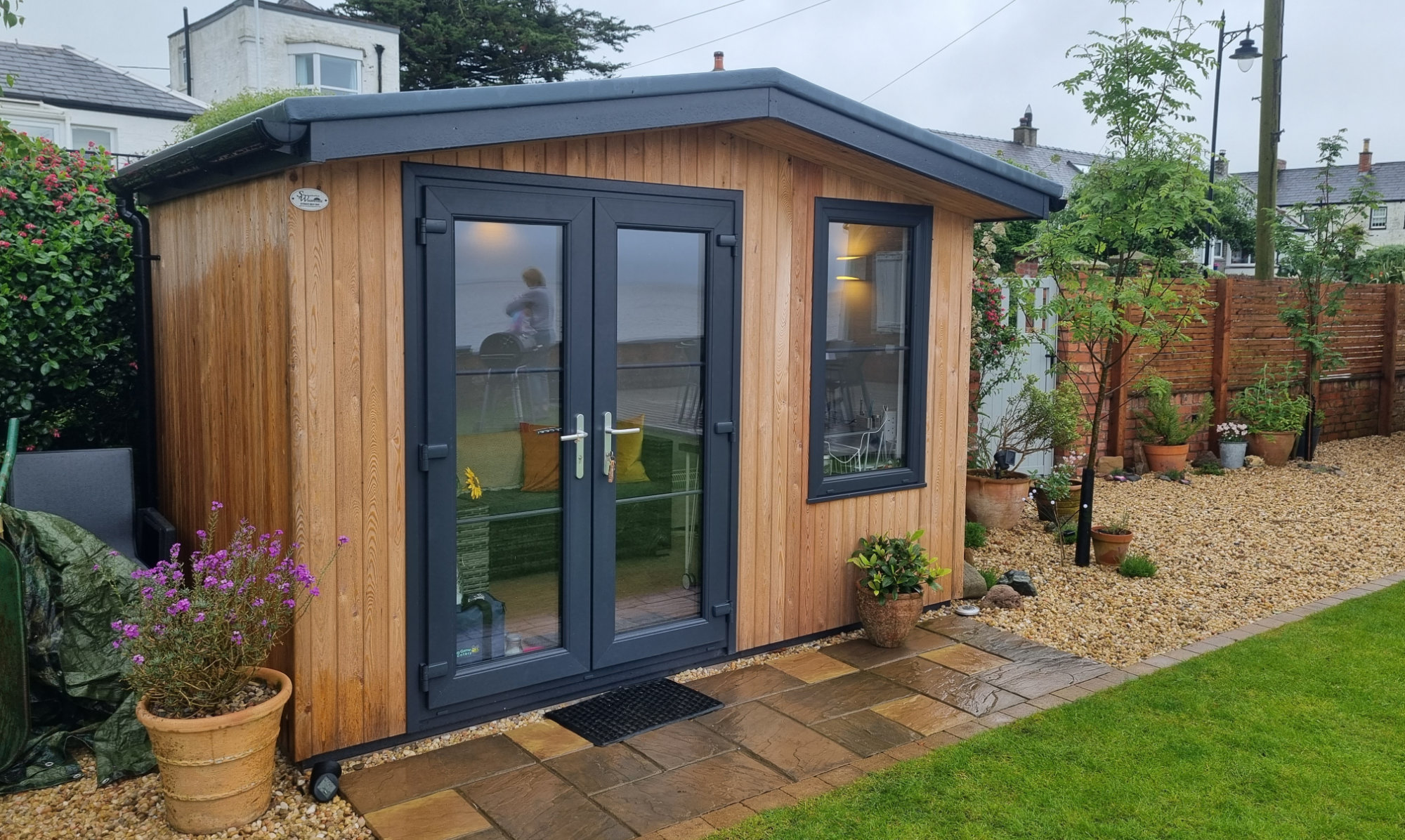
Somewhere in the marketing around garden rooms, a five figure structural build started to feel like buying a shed. Glossy renders, a price on the page, a deposit button. Easy.
It should not feel that easy. A garden room has foundations, electrics, insulation and a roof that has to survive Scottish weather for decades. It is closer to a small extension than a piece of furniture, and it deserves the same due diligence you would give a builder working on your actual house.
The good news is that due diligence here is not complicated. It is twelve questions, asked before any deposit changes hands, that separate an established local builder from a slick website with a supply chain nobody can trace. Ask them of everyone you are considering, including us.
Insurance and Protection
-
What public liability insurance do you carry, and can I see it in writing?
This covers damage or injury during the build, from a dropped tool through your patio door to a trip hazard for a visiting relative. Professional builders typically carry at least £2 million of cover, with £5 million or more common for larger projects. A reputable company will send you the certificate without being asked twice. Hesitation here is a real warning sign.
-
Do you use subcontractors, and are they insured separately?
Many perfectly good builders subcontract elements like electrical work. That is normal. What matters is that every person on your site, whoever employs them, is covered. Ask for written confirmation covering subcontractors specifically, not just the main company.
-
Is my deposit protected, and is the warranty insurance backed?
This is the single most important question on this list. A verbal promise of a ten year guarantee is worth nothing if the company folds in year three. An insurance backed guarantee, typically arranged through a body such as the IWA, protects both your deposit if the builder cannot start and your warranty if the builder cannot finish or later ceases trading. Ask specifically whether the guarantee is insurance backed, not just whether a guarantee exists. The two are very different promises.
-
Will building work affect my home insurance, and do I need to tell my insurer?
Standard home insurance often will not automatically cover construction in progress, particularly for anything involving groundworks or new electrical connections. A transparent builder will flag this and suggest you notify your insurer before work starts, rather than staying quiet and hoping it does not come up.
The Build Itself
-
What is specified for my base, and has it been assessed for my actual ground?
Every quote should name the foundation type and explain why it suits your site, not offer a generic figure. Sloping ground, soft ground, tree roots and drainage all change what a base needs to be. A builder who has not asked about your ground has not really quoted for your garden.
-
What insulation goes into the floor, walls and roof, specifically?
“Fully insulated” appears on almost every listing and means very different things from one builder to the next. Ask for the specification: material, thickness, and the standard it meets. This is the difference between a room that works in July and one that works in January too.
-
What timber and cladding are you using, and why?
A builder who can explain why they chose a particular timber for your specific site, aspect and budget is thinking about your building. A builder who names a material with no explanation is reading from a brochure. This is also where you can ask directly about maintenance: how often the cladding needs treating, and what happens if you skip a year.
-
Do I need planning permission or a building warrant, and who handles that?
In Scotland this question has sharper edges than most UK guides admit, particularly around building warrants once drainage, habitable use or certain heights and boundary positions are involved. A builder working regularly in your council area should be able to give you a straight answer for your specific plans, and should say plainly if you need to apply for anything yourself before work can start.
Process and Accountability
-
What happens if the project overruns, and is that written into the contract?
Weather, supply delays and site surprises happen even to good builders. What separates a professional outfit is having a clear process for communicating delays and a written position on how overruns are handled, rather than going quiet until you chase them.
-
Can I see photographs or visit a completed project nearby?
Renders show intent. A completed build shows reality: how the cladding has weathered, how the corners are finished, whether the doors still run smoothly a year on. A local builder with genuine local projects should be glad to arrange this. One who cannot points you to anything real is worth a second look.
-
What is included in the price, and what is not?
Ask this as a direct list: base, electrical connection, internal finish, glazing spec, VAT. Get it in writing. This single question prevents almost every unpleasant surprise that turns up on garden room forums, where the complaint is rarely the workmanship and almost always a cost that was never mentioned at quote stage.
-
Who do I contact if something goes wrong after handover, and how quickly do you respond?
Ask for the specific process: a named contact, an expected response time, and what is covered under the guarantee versus what would be a separate call-out. A builder who is still local and still trading in ten years is the best guarantee you can actually rely on, and their answer to this question tells you whether they expect to be.
Reading the Answers
None of these questions are designed to catch anyone out. A genuinely good builder answers all twelve calmly, usually with documents ready before you finish asking. What you are really testing is whether the business behind the brochure is built the same way it is asking you to build your garden room: properly, with nothing hidden in the finish.
The warning signs cluster together. Vague answers on insurance, a guarantee that turns out to be a promise rather than a policy, reluctance to name a base specification, and no completed local projects to point to. Any one of those alone might have an innocent explanation. Several together are a pattern worth walking away from.
Frequently Asked Questions
Is it reasonable to ask for all of this before paying a deposit?
Yes, entirely. A garden room is a significant structural investment, and any established builder will expect these questions and have ready answers. If a request for basic documentation causes friction before you have even signed anything, that tells you what working together would be like.
What if a builder cannot offer an insurance backed guarantee?
Ask why, and ask what protection you do have instead. Some smaller, well-established local builders self-guarantee based on their trading history, which can be reasonable, but you should understand exactly what happens to your deposit and warranty if the worst happened, rather than assuming.
Should I get more than one quote?
Always, and put every quote through these same twelve questions rather than just comparing the final figure. A lower price that excludes the base and the electrics is not actually a lower price.
How do I check a builder’s claims are genuine?
Ask for insurance certificates and guarantee documentation in writing, look for accreditation with a recognised trade body, and ask to see or visit completed local projects rather than relying on a portfolio of renders alone.
Ask Us Everything on This List
We would rather answer these twelve questions before you sign than have you wonder about them after. Signature Woodwork designs and builds bespoke timber garden rooms and camping pods from Castle Douglas, insured, guaranteed and with completed projects across Dumfries and Galloway you are welcome to see.
Book a free site visit and bring the list. We will go through every question, show you the paperwork, and give you a straight answer on your specific site.
The base is one of the first things to ask about. Our guide to garden room foundations in Scotland compares concrete slabs, ground screws and timber frames, so you know what to look for in a quote.
