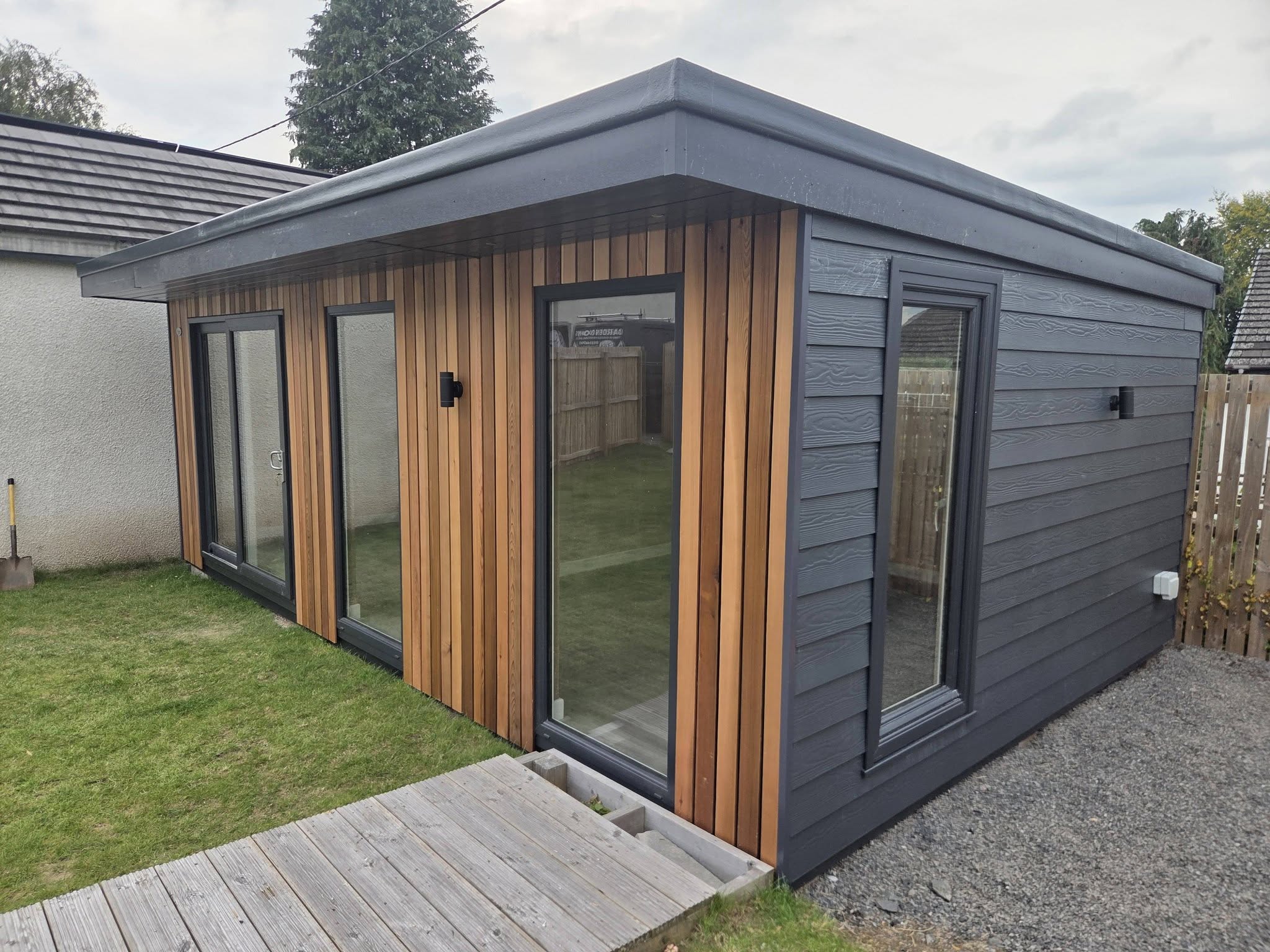
Garden room cladding is the first thing anyone notices about a garden room. It sets the style, frames the view from the house and decides how the building looks in five or ten years. It is also the part that takes the weather every single day.
In Dumfries & Galloway, that means wind-driven rain off the Solway, damp autumns and the odd winter storm. The 2026/27 storm names were announced on 1 September, and the next few months are when cladding is really tested. So it is worth choosing it carefully.
What cladding has to do here
Good cladding does more than look the part. In South West Scotland it needs to:
- shed rain quickly and dry out well between showers
- resist rot, warping and splitting
- stay firmly fixed in strong winds
- age in a way you are happy with
How the cladding is fitted matters as much as the material. A ventilated gap behind the boards, a breathable membrane, sealed end grain, proper drip details and stainless steel fixings all help any cladding last longer. Stainless fixings are especially important with cedar and larch, because ordinary steel can react with the timber and leave dark streaks.
Larch: local, tough and good value
Larch is a traditional Scottish cladding and a popular choice for garden rooms, garages and outbuildings. The Scottish Government’s timber cladding guidance describes home-grown European larch as “perfectly suitable for many cladding applications”, although not quite as durable as cedar.
Why people choose it: it is strong, naturally weather resistant, grown in the UK and usually better value than imported cedar. It has a rustic character with visible knots and grain.
What to know: larch moves more than cedar as it dries and can resin or split slightly. Left untreated, it weathers to a silver-grey over time.
You can see larch in action on the bespoke larch carport we built in a day.
Western red cedar: the premium timber
Cedar is lighter, more stable and naturally durable, with a warm, rich colour when new. The same Scottish Government guidance notes it is often chosen because it “weathers to an attractive silver-grey”, and that it needs no painting.
Why people choose it: it looks beautiful, moves less than most timbers, needs little maintenance and gives a high-end finish.
What to know: it costs more, it is softer so it marks more easily, and it must be fitted with stainless fixings.
Our 6m by 4.2m cedar garden room with a side canopy in Dumfries shows how cedar looks on a larger building.
Cedral: the low-maintenance option
Cedral is not timber at all. It is a fibre cement board made to look like painted weatherboard, and it comes in a range of factory-finished colours.
Why people choose it: it does not rot, the colour stays consistent and it needs very little upkeep beyond the occasional wash. It gives a crisp, contemporary look.
What to know: it lacks the natural grain of timber, and it suits modern designs better than rustic ones.
We have used Cedral on garden rooms across the region, including a pewter Cedral tattoo studio in Dumfries and a black Cedral home office in Annan.
Black timber and dark finishes
Black garden rooms are one of the strongest looks of the moment, and they suit the Dumfries & Galloway landscape well. You can achieve it with stained timber, charred-effect timber or black Cedral. Stained timber will need recoating over time to keep a deep, even colour, while factory-finished boards hold their colour longer. Dark cladding also absorbs more heat in direct sun, so ventilation and shading should be planned in. Our black timber garden room built around the view is a good example.
Let it silver or keep the colour?
Silvering is a natural reaction to sunlight and weather. It does not mean the timber is rotting. Many people love the soft grey look, especially in rural settings.
If you want to keep the original colour, the timber will need treating regularly, and it can weather unevenly where parts are sheltered by a roof overhang or canopy. It is worth deciding at the start which way you want to go, because it affects the design details as well as the upkeep.
Questions to ask before you choose
- How exposed is the site to wind and rain?
- Is the room near trees that drip or shed leaves and sap?
- What does the house look like, and should the room blend in or stand out?
- How much maintenance are you happy to do?
- How do you want it to look in ten years, not just on handover day?
Choose cladding that suits your setting
There is no single best garden room cladding, only the right choice for your garden, your budget and how you want the building to age.
Signature Woodwork designs and builds bespoke garden rooms across Dumfries & Galloway from Castle Douglas, with every building made to measure. You can browse finished rooms in all three materials in our projects gallery. If you are planning a garden room, get in touch or call 01556 514000 for a free consultation, and we will help you choose a finish that looks right and stands up to the weather.
